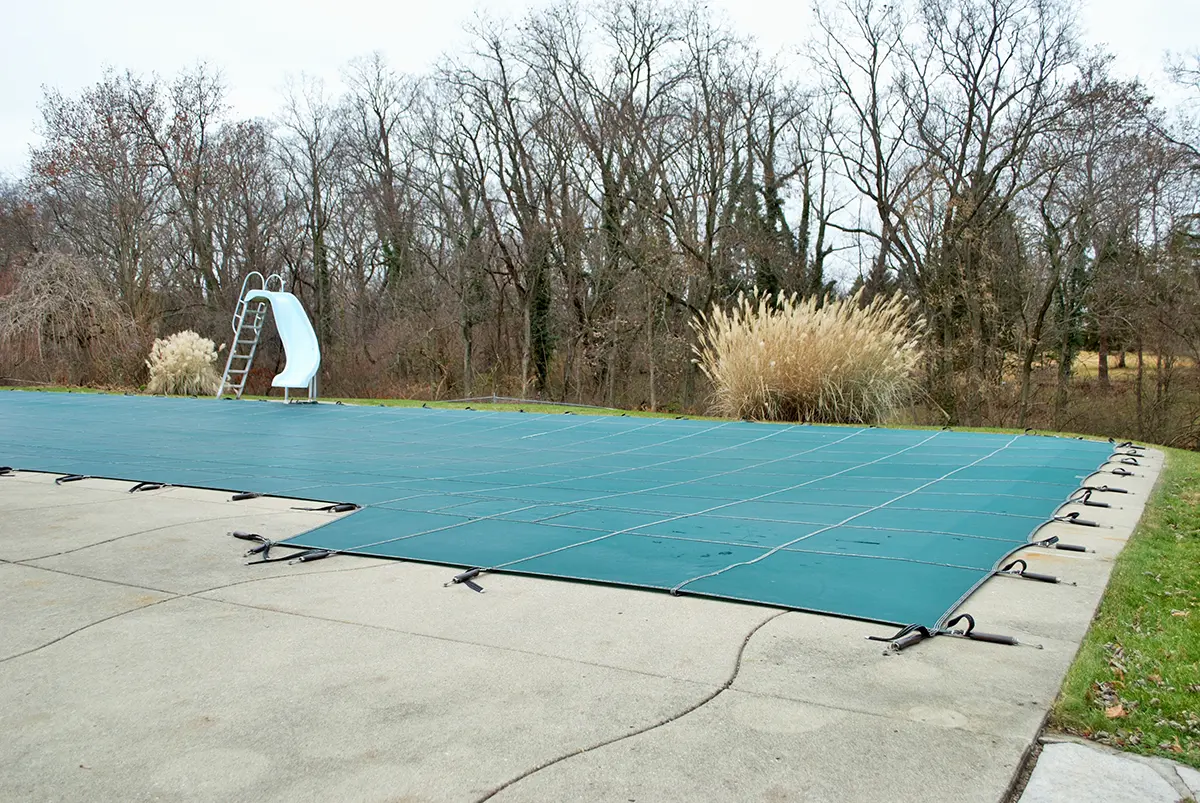
As October arrives, and colder days along with it, pool season begins to die down. Making sure everything is in order and properly closed is essential to keep your pool ready for when the warm days come back. Checking your pool equipment early can help you avoid winterization damage, but what do you need to check to ensure your pool survives winter temperatures? Let Alpha Pools USA handle your pool’s winter close with professional care and attention, so you can have peace of mind during the winter.
When Should You Close Your Pool? The 65-Degree Rule
Before deciding whether your equipment and pool are ready to winterize and store, remember the 65-degree rule. This rule helps pool owners remember not to close and cover their pool until the water temperature is at or below 65 degrees. Why is the water temperature important? Warmer water creates a much more favorable environment for algae growth, making opening in later seasons much more difficult. While the 65-degree rule is essential for keeping your pool in good condition, remember that weather is the ultimate factor. Watch your water temperature and weather forecasts so you can judge when it’s time to winterize your pool.
Inspect Your Pool Equipment
Before closing any pool, make sure each piece of equipment works properly and has no leaks or damage. Complete any maintenance and repairs needed to winterize your pool so it’s ready to open during the warmer months.
Check the Filter
Your pool filter constantly works to keep dirt and debris out of your pool’s water. Look for signs of improper operation, whether that’s a leak, pressure issues, or a damaged component. If your filter required frequent cleaning in the past, that could be a sign that something is not working up to standard.
Examine the Heater
It is always a good idea to know how your pool heater is running. For owners who like to swim into the fall, a working heater is essential for a comfortable experience as temperatures start to dip. Even if you don’t plan to use your pool in the colder months, it’s still important to make sure your heater is working properly. Address corrosion, leaks, unusual performance, and visible damage before you winterize your pool to avoid further damage and make reopening easier.
Look Over Valves and Plumbing
Valves control how water moves through your pool’s circulation system, while plumbing carries water between the pool, pump, filter, heater, and other equipment. Make sure your valves have no cracks, leaks, or visible damage. With Virginia’s uncertain weather, your plumbing and valves can take on extra, unwanted stress. Identifying any issues before winter weather rolls in is crucial.
Review Timers and Automation Systems
If you use an automated control system for your pool, make sure everything is running correctly before closing your pool for the winter. Make sure all components are running as they should under your automated system’s parameters. This would also be a good time to ensure that your system is set to the proper settings for the off-season.
Don’t Forget About Electronic Components
Your pool relies on electricity to run many important components, including pumps, heaters, automation systems, and more. If you notice damage, corrosion, loose connections, or other electrical issues, contact our professionals to handle the repairs, as water and electricity can create major safety hazards.
Take the Stress Off Your Plate by Calling Alpha Pools USA to Winterize Your Pool
Several factors and components of a pool should be inspected before closing for winter. We know this can be a lot to handle for some homeowners. That’s why Alpha Pools USA is available to give your pool a proper inspection to catch issues before it’s too late. We’ll winterize it properly so it’s easier to open when the warmth comes back.